
RAD Collaboratory Research Symposium
Bringing together the Rutgers community and its partners to showcase artificial intelligence and data science research.

Join us for the Inaugural RAD Collaboratory Research Symposium
The Rutgers Artificial Intelligence and Data Science (RAD) Collaboratory is pleased to announce its inaugural Research Symposium to be held on Tuesday, March 24, 2026 at the Douglass Student Center.
Registration is now closed. Sorry, no walk-ins. This is an in-person event – there is no virtual option.
This in-person symposium brings together Rutgers faculty, research staff, postdoctoral fellows, students, and partners from industry to showcase data science and artificial intelligence research through keynote lectures, Rutgers faculty and industry panel discussions, and a trainee poster session, followed by a community engagement reception.
The event aligns with the RAD Collaboratory, a New Brunswick Chancellor Signature Initiative overseen by the Rutgers–New Brunswick Office for Research that advances collaborative data science and AI/ML research, student programming, and community engagement across Rutgers.
This symposium is made possible with funding and support provided by the Rutgers-New Brunswick Office of the Chancellor, the Rutgers-New Brunswick Office for Research, and the Rutgers University Office of the Executive Vice President for Academic Affairs.
-
All sessions are in Trayes Hall unless otherwise noted.
9:30 am Check-in and Continental Breakfast
10:00 am Welcome
- Francine Conway, Rutgers-New Brunswick Chancellor
Introduced by Wendie Cohick, Rutgers-New Brunswick Vice Provost and Vice Chancellor for Research
10:15 am RAD Collaboratory Overview
- Stephen K. Burley, Director, RAD Collaboratory and University Professor and Henry Rutgers Chair, Chemistry and Chemical Biology, School of Arts and Sciences
10:30 am Future of AI – From Data Driven to Abstractions, Explainability and Inference for Humans
- Dimitris Metaxas, Board of Governors Professor, Computer Science, School of Arts and Sciences
Description: Current statistical data driven AI methods have clearly achieved remarkable results and applications in many domains due to learning features from raw data which are superior to human low level capabilities. However, the inference is mostly black box, statistical and lacks sophisticated abstractions, inference, discovery of new knowledge, emotions, and creativity like humans. In an effort to address some of these issues and towards white box human like intelligence, we have been developing a computational learning and AI framework that combines principles of physics, dynamical systems, domain knowledge and generative methods theory to augment the performance of pure data driven AI/ML methods. Methods include the discovery of physics and ODEs, the incorporation of domain knowledge to offer human level explainability and abstractions, and the ability to deal with data statistics and dynamics not in training dataset, as well as human feedback. This spatio-temporal intelligence framework has been used for resolution of complex dynamic problems in computer vision and biomedical and genomic applications, as well as ASL recognition. We will present results in human and multi-object tracking and dynamics, data generation, cardiac and cancer analytics, histopathology, genomic applications, and ASL recognition, and we will provide insights into human-like learning-based decision making, and the use of generative methods. We will conclude with future research directions.
11:00 Panel Discussion: RAD Collaboratory and Artificial Intelligence – Catalysts for Accelerating Collaborative Multidisciplinary Research
Moderated by Jim Samuel, Associate Professor of Practice and Executive Director, Master of Public Informatics, Edward J. Bloustein School of Planning and Public Policy
Panelists (listed in alphabetical order):
- Adam Gormley, Associate Professor, Biomedical Engineering, School of Engineering
- Åsa Rennermalm, Professor, Geography, School of Arts and Sciences
- Matthew Stone, Professor, Computer Science, School of Arts and Sciences
- Piyushimita “Vonu” Thakuriah, Distinguished Professor, Director of the Rutgers Urban and Civic Informatics Lab, Edward J. Bloustein School of Planning and Public Policy
- Jaideep Vaidya, Distinguished Professor and Vice Dean for Faculty Affairs and Research, Management Science and Information Systems, Rutgers Business School-Newark and New Brunswick
12:00 pm Networking Lunch
12:45 pm Student and Postdoctoral Fellow Poster Session
Douglass Lounge (2nd floor)
1:30 pm Curriculum and Research Innovation in an Era of Disruptive Technologies
- Sharon Xiaolei Huang, David Reese Professor, College of Intelligent Systems, The Pennsylvania State University
Description: The Penn State College of Information Sciences and Technology (IST) was established in 1999 to address challenges emerging at the intersection of information, technology, and society—challenges that have only intensified in an era of disruptive technologies such as artificial intelligence, large-scale data analytics, and ubiquitous computing. From the outset, the college was designed as an interdisciplinary academic unit, offering programs integrating computing, data, and human-centered perspectives. This talk examines how IST has continuously evolved its curriculum and research enterprise to keep pace with rapid technological change, through a distinctive portfolio of undergraduate programs, project-based learning, and research initiatives spanning data science and AI, human–centered computing, privacy and security, and social and organizational informatics. These sustained innovations have resulted in strong growth in external research funding (over $11 million in active grants), robust student enrollment (over 2,600 students), and expanding partnerships. Over the past five years, enrollment has increased by 23%, alongside the emergence of novel multidisciplinary research and educational programs, demonstrating that the college model has been effective, scalable, and on a steep upward trajectory.
2:00 pm Panel Discussion: Rutgers AI and Data Science Research and Development with Industry Stakeholders
Moderated by Jaideep Vaidya, Distinguished Professor and Vice Dean for Faculty Affairs and Research, Management Science and Information Systems, Rutgers Business School-Newark and New Brunswick
Panelists (listed in alphabetical order):
- Karthik Narasimhan, Senior Business Development Manager for Genomics and Life Sciences, Amazon Web Services
- Stephanie Poll, Managing Director, Audit Transformation, Deloitte
- Toacca Rutherford, Managing Director, Head of Knowledge Management for Machine Learning and Intelligence Operations at JPMorgan Chase
- Maryanna Shahid, Vice President & Head of Tech for Data, Analytics & Intelligent Automation, Johnson & Johnson
3:00 pm 2026 RAD Collaboratory Grand Challenge
3:15 pm Closing Thoughts
- Stephen K. Burley, Director, RAD Collaboratory and University Professor and Henry Rutgers Chair, Chemistry and Chemical Biology, School of Arts and Sciences
3:20 pm Networking Reception
Douglass and NJC Lounges (2nd floor)
4:00 pm Adjourn
-
Registration is now closed. Sorry, no walk-ins.
This is an in person event – there is no virtual option.
-
The RAD Collaboratory Research Symposium will be held at the Douglass Student Center in Trayes Hall unless otherwise noted.
Douglass Student Center, 100 George Street, New Brunswick, NJ 08901 (Douglass Campus)
Directions: Click here for a map of the Douglass Student Center. Click here for driving directions to Lot 70 and the Douglass Parking Deck which are located next to each other.
Parking: Visitors must register their vehicles with Rutgers parking: parking registration. Click “Visitors” then enter their email and vehicle information to complete registration. No parking pass is needed. Visitors may park in Lot 70 and the Douglass Parking Deck; these lots are adjacent to each other and can be accessed from Lipman Drive.
Rutgers affiliated Faculty, Staff, and Students must have a Rutgers parking permit (Semester or Daily) and park accordingly. Faculty, Staff, and Students parking without a parking permit or outside their parking permit assignment will be subjected to ticketing and/or towing.
Public Transportation: The New Brunswick train station is located at French and Albany Street, between Easton and George Street. Rutgers-New Brunswick campus busses are available free of charge. From the train station, you can take the EE or F bus from The Yard (Scott Hall) on the College Avenue Campus to Red Oak Lane on the Cook/Douglass Campus. From the Red Oak Lane bus stop, the Douglass Student Center is a short walk across Lipman Drive and past the Douglass Parking Deck. Click here to view the weekday bus map and click here to track the campus busses in real-time.
-
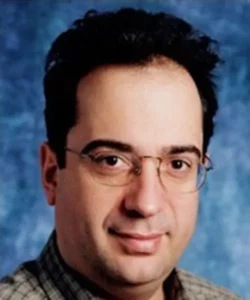
Dr. Dimitris Metaxas is a Board of Governors and Distinguished Professor in the Computer and Information Sciences Department at Rutgers University. He is directing the CBIM Center and the NSF University-Industry Collaboration Center CARTA, and is also a member of the RAD Collaboratory. Dr. Metaxas has been conducting research in the general area of spatiotemporal intelligence. The focus is the development of novel methods and algorithms upon which AI, machine learning, computer vision, medical image analysis, language and graphics/generative methods can advance synergistically in the presence of dynamic spatio-temporal multimodal data and domain knowledge. In biomedical image analysis he developed Machine Learning and deformable model-based methods for material modeling and shape estimation of internal organs from MRI, SPAMM and CT data, explainable diagnosis methods, cancer and cell, analytics.
Recently in collaborative research with RAD Collaboratory researchers, he is working on improving search within the PDB. In computer vision he has focused on novel ML estimation methods including foundation models (generation, explainability, interpretability) for human behavior analytics, ASL recognition from video, scene understanding, physics-based modeling and complex dynamical systems, including autonomous driving applications. Dr. Metaxas has published over 800 research articles in these areas and has graduated over 80 PhD students, who occupy academic and industry positions. His research has been funded by NIH, NSF, AFOSR, ARO, DARPA, HSARPA, and the ONR. Dr. Metaxas work has received many best paper awards and he has 10 patents. He was awarded a Fulbright Fellowship in 1986, is a recipient of an NSF Research Initiation and Career awards, and an ONR YIP. He is a Fellow of the American Institute of Medical and Biological Engineers, a Fellow of IEEE and a Fellow of the MICCAI Society. He has been involved with the organization of all major conferences in computer vision and medical images analytics ( IEEE ICCV 2031, IEEE CVPR 2026, IEEE CVPR 2014, ICCV 2011, IPMI 2025, DDDAS 24&26, MICCAI 2008; PC ICCV 2007, FIMH 2011 and SCA 2007).

Dr. Sharon Xiaolei Huang is a distinguished researcher and professor in the College of Information Sciences and Technology (IST) at The Pennsylvania State University, where she holds the David Reese Professorship. Her research focuses on artificial intelligence, particularly in computer vision and generative AI, with major contributions to image and video generation, salient object detection, image segmentation, 3D scene reconstruction, and multimodal AI. She has published more than 200 scholarly articles with over 24,700 citations and has an h-index of 51 and an i10-index of 131. Dr. Huang serves as co–program chair for WACV 2026 and has held area chair and editorial roles for leading conferences and journals, including CVPR, ECCV, NeurIPS, AAAI, MICCAI, Medical Image Analysis, and Computerized Medical Imaging and Graphics. Beyond her research, Dr. Huang has played a major leadership role in academic program development at Penn State: she served as Data Sciences Program Coordinator, receiving the University’s Undergraduate Program Leadership Award in 2022, and she helped to establish Penn State’s first Bachelor of Science degree in Artificial Intelligence. She currently serves as Interim Head of the Department of Informatics and Intelligent Systems in the College of IST. Dr. Huang received her bachelor’s degree in computer science from Tsinghua University and her master’s and doctoral degrees in computer science from Rutgers University–New Brunswick.
-
Listed in alphabetical order.

Dr. Adam Gormley is an Associate Professor of Biomedical Engineering at Rutgers University, Executive Editor of Advanced Drug Delivery Reviews, and co-founder of Plexymer, Inc. Prior to Rutgers, Adam was a Marie Skłodowska-Curie Research Fellow at the Karolinska Institutet (2016) and a Whitaker International Scholar at Imperial College London (2012-2015) in the laboratory of Professor Molly Stevens. He obtained his PhD in Bioengineering from the University of Utah in the laboratory of Professor Hamid Ghandehari (2012), and a BS in Mechanical Engineering from Lehigh University (2006). In January 2017, Adam started the Gormley Lab which seeks to develop bioactive nanobiomaterials using robotics and artificial intelligence. Dr. Gormley is currently the PI of a OVPR ML/AI Pilot Seed Grant as well as an NIH R35 MIRA Award, an NSF CBET Award, and an NSF Designing Materials to Revolutionize and Engineer our Future (DMREF) Award. He is the recipient of the A. Walter Tyson Assistant Professorship, the Young Innovator Award by Cellular and Molecular Bioengineering, and the Presidential Fellowship for Teaching Excellence.

Dr. Åsa Rennermalm is a professor at the Department of Geography at Rutgers, The State University of New Jersey. Her research interest is the hydrology of the Arctic region. Currently, she is discovering how water is transported and retained within the Greenland ice sheet to better understand how much meltwater escapes to the ocean and rising global sea levels. Her work involves modeling, satellite and in situ data analysis, and fieldwork. She has participated in several field expeditions to the Arctic, mainly Greenland.
Åsa joined Rutgers faculty in 2009. Before coming to Rutgers, she was a postdoctoral researcher at the Department of Geography at the University of California Los Angeles (advisor: Laurence C. Smith). Her Ph.D. is in Civil and Environmental Engineering at Princeton University (advisor: Eric F. Wood). Her master’s and undergraduate degrees are from the University of Copenhagen in Denmark (advisor: Henrik Soegaard).
Dr. Matthew Stone is Professor of Computer Science and holds an appointment in the Rutgers Center for Cognitive Science. He served as chair of the Computer Science Department from 2019-2023. He did his PhD at the University of Pennsylvania. Professor Stone’s research bridges the design of AI-powered conversational agents with linguistic, psychological and philosophical research on the mechanisms of collaborative language use in human face-to-face conversation. His recent computational research has explored the generation and interpretation of image captions, pointing gestures, and clarification requests, in tandem with philosophical work on chatbot design, discourse coherence, context-dependence, and the interpretation of situated utterances.

Dr. Piyushimita “Vonu” Thakuriah is a Distinguished Professor and the Director of the Rutgers Urban and Civic Informatics (RUCI) Lab at Rutgers University-New Brunswick. Her research interests include transportation planning and operations; big data, urban informatics, smart cities, and social and economic cyberinfrastructure; and the data justice implications of information technology, artificial intelligence, and automation. She has extensive experience assisting government agencies and private companies in identifying data-intensive and technology-based solutions to complex urban and mobility challenges, with a focus on ethical and environmentally sustainable outcomes.
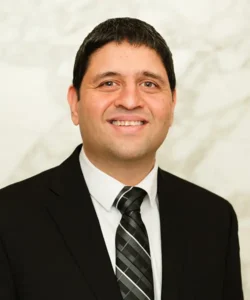
Dr. Jaideep Vaidya’s research program is focused on making data, computation, and artificial intelligence SAFE (Secure, Auditable, Fair and Equitable). Today, scientific endeavors, commercial activities, and governmental interactions all rely on data collected and processed through the computing infrastructure. However, the unrestrained collection of data poses great challenges – challenges for analytics, challenges for security, and challenges for privacy and fairness. Prof. Vaidya’s primary work has been on resolving the conundrum of how to effectively make use of data while respecting the massive scope of the data as well as the privacy/security concerns of the owning entities. Starting from his initial work in privacy-preserving data mining, his work has addressed broader privacy concerns in diverse domains such as collaborative optimization, collaborative filtering, mobile computing, and biomedical informatics. Along with privacy, he is also interested in ensuring the security of information through automatic access control configuration and management, security analysis, and efficient enforcement of security policies. Furthermore, utilizing his analytics background, he has made key research contributions to the effective summarization and analysis of data, and developed technological solutions to help improve governance and enable effective emergency response. Notably, the team that he led (Team ScarletPets) developed a highly accurate and holistic financial fraud detection system, which delivered strong end-to-end privacy guarantees against a set of common threats and privacy attacks, winning the first prize in the US for the Financial Crime track of the US-UK Privacy Enhancing Technologies Challenge announced by President Joe Biden in the Summit for Democracy. Prof. Vaidya is also a member of the CASS: Cyberinfrastructure & AI for Science and Society, one of the four signature projects funded by the Rutgers New Brunswick Chancellor Challenge to build interdisciplinary scholarship and scholarly communities to serve the common good.
Panel Moderator:
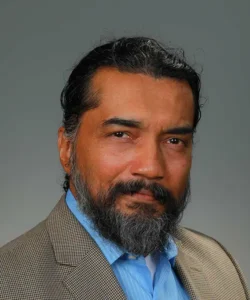
Dr. Jim Samuel, Executive Director, Informatics Programs, Associate Professor of Practice, Bloustein – Rutgers, is an expert in artificial intelligence (AI) strategy and AI innovation, especially in NLP applications. His research covers human enhancive AI, AI applications, healthcare AI & chatbots, agentic AI, and socioeconomic impacts of AI. He holds a Ph.D. from Baruch – CUNY, M.B.A. in international finance from Thunderbird -ASU, and AI-NLP training from Stanford University. Dr. Samuel has published extensively in academic journals and advises businesses on AI strategies. He is the chair of the Rethinking Artificial Intelligence for Shared Empowerment (RAISE) AI research initiative, Editor in Chief of the Journal of Big Data and Artificial Intelligence (JBDAI), Senior Member – IEEE USA; he leads AI strategy at AIXosphere LLC, a human-enhancive Artificial Intelligence (AI) strategy and AI innovation company, and advises organization on AI strategy, productivity and risk management.
-
Listed in alphabetical order.
Karthik Narasimhan is the Senior Business Development Manager for Genomics and Life Sciences at Amazon Web Services (AWS). In this role, he works with academic institutions in the US to accelerate biomedical and genomic research using cloud computing, advanced data platforms and AI-driven approaches. Previously, he led the global startup strategy for healthcare and life sciences at AWS. He has more than a decade of experience in the healthcare and life sciences field and holds a Ph.D. in Biological Sciences from the National University of Singapore and an MBA from the University of Texas at Austin.
Stephanie Poll is a Managing Director at Deloitte, where she leads Audit Transformation initiatives focused on modernizing audit practices through advanced analytics, automation, and emerging technologies. She works with global organizations to redesign risk management and assurance processes, helping integrate data-driven approaches and AI-enabled tools into enterprise audit and compliance functions.
Toacca Rutherford is the Head of Knowledge Management for Machine Learning and Intelligence Operations at JPMorganChase, leading product strategy and development to transform how knowledge is leveraged through AI and machine learning for over 120,000 employees and 60 million customers. Her career includes leadership roles as Head of Product for Chase Digital Self-Service, Head of Business Engineering, Chief Development Officer for Consumer, Business Banking, and Auto Finance Technology, and CTO for Commercial & Investment Banks’ Finance department. Based in New York City, Toacca leads a cross-functional team recently nominated for a 2025 Banking Tech Award for Best Use of AI/ML. She has received the Rutgers Business School Business Excellence Award, the Women of Color STEM Conference Rising Star Award, and was inducted into the Rutgers African-American Alumni Alliance Hall of Fame. Toacca has been featured by AWS, Rutgers Center for Women in Business, Built In, New Jersey Business Magazine, and Black Enterprise. She serves on the Rutgers Business School Board of Advisors and is a member of Delta Sigma Theta Sorority, Inc.
Maryanna Shahid is Vice President and Head of Technology for Data, Analytics, and Intelligent Automation at Johnson & Johnson. She leads global technology initiatives that enable advanced analytics, AI-driven insights, and automation across the company’s business and operational functions. Her work focuses on building scalable data platforms and intelligent systems that support innovation and data-driven decision making within one of the world’s largest healthcare organizations.
Panel Moderator:
Dr. Jaideep Vaidya‘s research program is focused on making data, computation, and artificial intelligence SAFE (Secure, Auditable, Fair and Equitable). Today, scientific endeavors, commercial activities, and governmental interactions all rely on data collected and processed through the computing infrastructure. However, the unrestrained collection of data poses great challenges – challenges for analytics, challenges for security, and challenges for privacy and fairness. Prof. Vaidya’s primary work has been on resolving the conundrum of how to effectively make use of data while respecting the massive scope of the data as well as the privacy/security concerns of the owning entities. Starting from his initial work in privacy-preserving data mining, his work has addressed broader privacy concerns in diverse domains such as collaborative optimization, collaborative filtering, mobile computing, and biomedical informatics. Along with privacy, he is also interested in ensuring the security of information through automatic access control configuration and management, security analysis, and efficient enforcement of security policies. Furthermore, utilizing his analytics background, he has made key research contributions to the effective summarization and analysis of data, and developed technological solutions to help improve governance and enable effective emergency response. Notably, the team that he led (Team ScarletPets) developed a highly accurate and holistic financial fraud detection system, which delivered strong end-to-end privacy guarantees against a set of common threats and privacy attacks, winning the first prize in the US for the Financial Crime track of the US-UK Privacy Enhancing Technologies Challenge announced by President Joe Biden in the Summit for Democracy. Prof. Vaidya is also a member of the CASS: Cyberinfrastructure & AI for Science and Society, one of the four signature projects funded by the Rutgers New Brunswick Chancellor Challenge to build interdisciplinary scholarship and scholarly communities to serve the common good.
-
The Student and Postdoctoral Fellow Poster Session will feature research posters from the following invited students and postdoctoral fellows.
Listed in alphabetical order.
- “HoloDraft: Augmented Reality CAD for Real-Time 3D Model Editing and Printing” presented by Aiden Annis in collaboration with Dominic Catena, Kashvi Shah, and Azra Bano. Advisors: Jenny Shane, Ivan Seskar, Wade Trappe
- “Assessing Retrieval-Augmented-Generation Methods for Causal Identification of Failures in Pipeline Systems” presented by Praneeth Damarla, 2025 RAD Collaboratory SURF Student
- “Accelerating Text-based Protein Searching via Retrieval-Augmented Generation workflow” presented by Kexin Ding, RAD Collaboratory Postdoctoral Fellow
- “A Unified Machine-Learning Framework for Atomic Structure and Defect Identification Across Crystal Types and Temperatures” presented by Yating Fang, RAD Collaboratory Postdoctoral Fellow
- “Finding Protein Design Performance Limits with AI-coupled Workflows” presented by Mason Hooten, RAD Collaboratory Postdoctoral Fellow
- “Using Machine Learning to Estimate Wildfire Smoke PM2.5 Exposure and Its Association with Household Income” presented by Atharv Jayprakash, 2025 RAD Collaboratory SURF Student
- “Bayesian Optimization of Protein Stability: A Self-Driving-Lab Approach” presented by Gantt Meredith, RAD Collaboratory Postdoctoral Fellow
- “Extending Finite-Element-Based Physics-Informed Neural Networks Using Advanced Python Libraries” presented by Anastasia Moreno, 2025 RAD Collaboratory SURF Student
- “Characterizing Potential New Species of Fructilactobacillus in Novel Honeypot Ant (Myrmecocystus mexicanus) Crop Fluid Using Comparative Genomics” presented by Ian Oiler, RAD Collaboratory Postdoctoral Fellow
- “AI for Good: Predictive Models for Environmentally Responsible Blue Economy Planning” presented by Het Patel, 2025 RAD Collaboratory SURF Student
- “Pipeline Risk Management via Data-Driven Bayesian Networks for Digital Twin Applications” presented by Nancy Zhang, 2025 RAD Collaboratory SURF Student
- “Robust Out-of-Order Retrieval for Grid-Based Storage at Maximum Capacity” presented by William Zhang, 2025 RAD Collaboratory SURF Student
Click here for more information on the RAD Collaboratory Summer Undergraduate Research Fellowship (SURF) program.
-
The Networking Reception will feature tables from the following external organizations.
Listed in alphabetical order.
- Amazon Web Services
- PKA Technologies Inc.
- Ricoh USA
- TEKSystems
- Velocity Tech Solutions
Rutgers University does not endorse the above mentioned networking reception organizations or their products, services, or opinions.
-
The Organizing Committee was integral in the development of the agenda and speaker selection.
Listed in alphabetical order.
- Sheila Borges Rajguru, Rutgers-New Brunswick Office for Research
- Stephen K. Burley, RAD Collaboratory, Chemistry and Chemical Biology, School of Arts and Sciences
- Kristin Dana, Electrical and Computer Engineering, School of Engineering
- Lauren Goodlad, English, School of Arts and Sciences
- Shantenu Jha, Electrical and Computer Engineering, School of Engineering
- Benjamin Lintner, Environmental Sciences, School of Environmental and Biological Sciences
- Amy Mandelbaum, Rutgers-New Brunswick Office for Research
- Dimitris Metaxas, Computer Science, School of Arts and Sciences
- Jim Samuel, Public Informatics, Edward J. Bloustein School of Planning and Public Policy
- Elizabeth Torres, Psychology, School of Arts and Sciences
- Jaideep Vaidya, Management Science and Information Systems, Rutgers Business School
- Bo Yuan, Electrical and Computer Engineering, School of Engineering
-
The Logistics Committee was integral in the coordination of the space, registration, poster session, communications, and all of the little details.
Listed in alphabetical order.
- Sheila Borges Rajguru, Rutgers-New Brunswick Office for Research
- Melissa Dinovelli, Rutgers-New Brunswick Office for Research
- Jonathan Hackett, Rutgers-New Brunswick Institute for Quantitative Biomedicine
- Tracy Higgins, Rutgers-New Brunswick Office for Research
- Michael Joy, Rutgers-New Brunswick Institute for Quantitative Biomedicine
- Amy Mandelbaum, Rutgers-New Brunswick Office for Research
- Michelle Sanghera, Rutgers-New Brunswick Institute for Quantitative Biomedicine
- Rubia Serra, Rutgers-New Brunswick Office for Research
- Shamara Whetstone, Rutgers-New Brunswick Institute for Quantitative Biomedicine
-
Rutgers University strives for our campus experiences to be universally designed and useable by all people to the extent possible. If you require an accommodation to participate in this event, please contact the event organizers, the RAD Collaboratory and the Rutgers-New Brunswick Office for Research, at nb-research@rutgers.edu by Friday, March 20, 2026. If you need an accommodation for this event, please provide the name of the event; the date; and the accommodation required in your correspondence to the event organizer.
